

Creativity and Solutions for Cultural Tourism in Fuerteventura
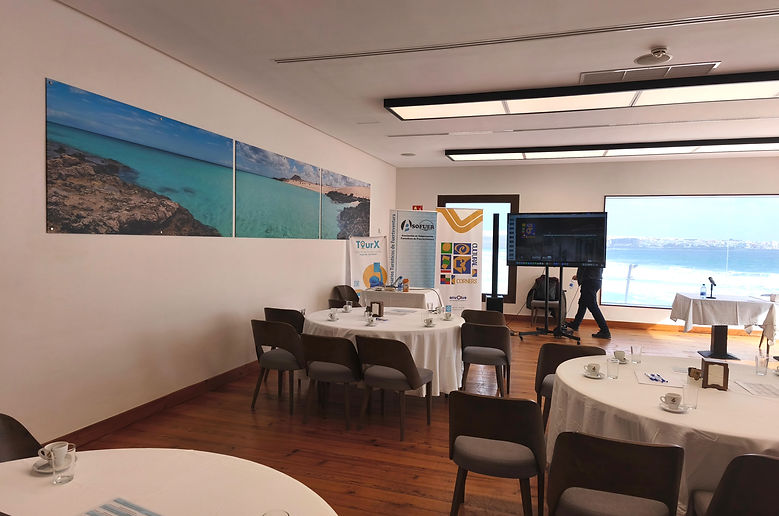
On March 11th, Asofuer hosted an inspiring and solution-driven session in Fuerteventura. The Cultural Corner Breakfast Workshop, held at Hotel Mirador, brought together around 30 participants, including cultural leaders, tourism professionals, entrepreneurs, and students.
The workshop, titled “Creativity and Solutions for Cultural Tourism,” created an interactive environment where participants collaborated to rethink the future of cultural tourism on the island, moving beyond challenges and actively designing innovative, sustainable solutions.
The Fuerteventura session was part of Deliverable 4.2, building on earlier research findings and turning insights into actionable ideas.
From Challenges to Creative Thinking
The workshop began with a clear and powerful message:
“Today we are not here to discuss problems. We are here to design solutions.”
Participants were introduced to key challenges identified in previous research:
-
A decline in visitors during the low season
-
Limited visibility of cultural offerings
-
Weak digital integration
-
Lack of collaboration between sectors
An engaging icebreaker invited participants to imagine Fuerteventura in 2030, crafting future newspaper headlines celebrating the island as a leader in sustainable cultural tourism. This exercise immediately shifted the room from problem-focused thinking to future-oriented creativity.
.jpg)
Identifying Gaps: The Need for a Unified Cultural Platform
One of the strongest recurring insights across groups was the absence of a centralised platform where residents and tourists can easily discover cultural activities happening across the island.
Participants highlighted that:
-
Cultural events are fragmented and difficult to find
-
There is no single digital space to explore what’s happening in real time
-
Visitors often miss out on authentic local experiences
This gap became a key starting point for many of the proposed solutions.

Workshop Methodology:
From Challenges to Solutions
The workshop was designed to move participants from identifying problems to generating concrete solutions through participatory and creative methodologies.
1. Challenge Definition
Participants were divided into tables, and each table received one of the following challenges:
-
Attracting visitors during the low season
-
Ideas: off-season cultural festivals, artist residencies, thematic events, unique experiences
-
-
Increasing visibility and accessibility of cultural offerings
-
Ideas: digital cultural platforms, interactive maps, cultural signage, information in hotels
-
-
Connecting artists and cultural organizations with tourism
-
Ideas: hotel-artist collaborations, hotel exhibitions, visitor workshops, cultural markets
-
-
Enriching visitor experiences with digital tools
-
Ideas: augmented reality, digital cultural routes, QR codes for heritage, interactive experiences
-
-
Developing sustainable cultural experiences benefiting the local community
-
Ideas: rural cultural routes, artisan-led experiences, cultural projects linked to landscapes, low-impact cultural tourism
-
Each table was asked to define who is affected, where the problem occurs, and what is currently missing, then formulate the problem in a single clear sentence.
2. Mind Mapping
After defining their challenge, tables moved into mind mapping.
-
Participants brainstormed around themes like digital tools, programming, sustainability, community, visitor experience, and business models.
-
Ideas were encouraged to be ambitious and hybrid (combining physical and digital solutions).
-
Each table selected three main ideas to advance.
3. SCAMPER Method
To refine and innovate their ideas, tables applied the SCAMPER methodology:
-
Substitute, Combine, Adapt, Modify, Put to another use, Eliminate, Reorganize
This process produced concrete pilot concepts, detailing:
-
Target audience
-
Season of implementation
-
Needed partners
-
Digital and sustainability components
-
Feasibility
4. Voting for Impact and Innovation
Finally, participants voted on the ideas using a color-coded system:
-
Green points → sustainability and impact
-
Blue points → innovation and novelty
The top 3–5 concepts were selected for priority development.
From Problems to Solutions: Ideas That Emerged
Through collaborative exercises such as mind mapping and the SCAMPER innovation method, each group developed both a clearly defined problem and a corresponding solution.
Several standout concepts emerged:
1. Positioning Fuerteventura as a Wellness Destination
One group proposed reimagining Fuerteventura as a wellness and cultural retreat destination, combining:
-
Art residencies
-
Digital detox experiences
-
Nature-based cultural activities
-
Slow tourism practices
This approach connects cultural tourism with well-being, aligning with global travel trends while leveraging the island’s natural landscape.
2. Reinventing Día de Canarias as a Year-Round Experience
Another group reimagined the traditional Día de Canarias(Day of the Canary Islands), typically celebrated once a year, as a rotating weekly cultural event.
The idea:
-
Host Día de Canarias-style celebrations every weekend
-
Rotate across different municipalities
-
Showcase local music, dance, gastronomy, and crafts
This would:
-
Extend cultural engagement beyond a single day
-
Attract visitors during low season
-
Distribute economic benefits across the island
3. A Centralised Folklore Festival Platform
A third group focused on the lack of accessible folklore experiences.
Their proposal:
-
Create a dedicated folklore festival and platform
-
Offer a single space (both physical and digital) where visitors can explore Canarian traditions
-
Include performances, workshops, and educational content
The goal is to ensure that local heritage is not only preserved but made visible and accessible to a wider audience.
4. A Digital Platform for Cultural Visibility
One of the most widely discussed challenges across all groups was the absence of a single, unified platform where people can easily discover cultural happenings on the island.
To address this, a group proposed the creation of a centralised digital platform that would:
-
Aggregate all cultural events happening across Fuerteventura
-
Provide real-time updates for residents and tourists
-
Include interactive maps, curated recommendations, and themed cultural routes
-
Integrate with hotels and tourism services
This platform would act as a digital gateway to the island’s cultural life, improving accessibility, increasing participation, and strengthening the visibility of local artists and events.
Collaboration at the Core
Throughout the workshop, a key theme emerged:
Innovation happens through collaboration.
Participants emphasized the need to:
-
Connect hotels with artists and cultural practitioners
-
Integrate cultural content into tourism spaces
-
Build stronger partnerships across sectors
The session also created valuable networking opportunities, allowing participants to exchange ideas and form new collaborations that could extend beyond the workshop.
Outcomes and Next Steps
By the end of the session, the workshop successfully generated:
-
20–30 initial ideas
-
5–8 developed pilot concepts
-
3 priority ideas selected through voting
-
New cross-sector connections
These results will contribute to the project’s innovation report and may evolve into future pilot initiatives in Fuerteventura.
A Shared Vision for the Future
The workshop concluded with a powerful reflection:
“Innovation occurs when culture, tourism, and community stop working in silos.”
The Cultural Corners workshop demonstrated that Fuerteventura holds immense potential not only as a tourist destination, but as a living cultural ecosystem where creativity, sustainability, and community can thrive together.